
La Cène — vol immersif
Comment transformer une peinture immédiatement reconnaissable en espace traversable sans perdre l'œuvre.
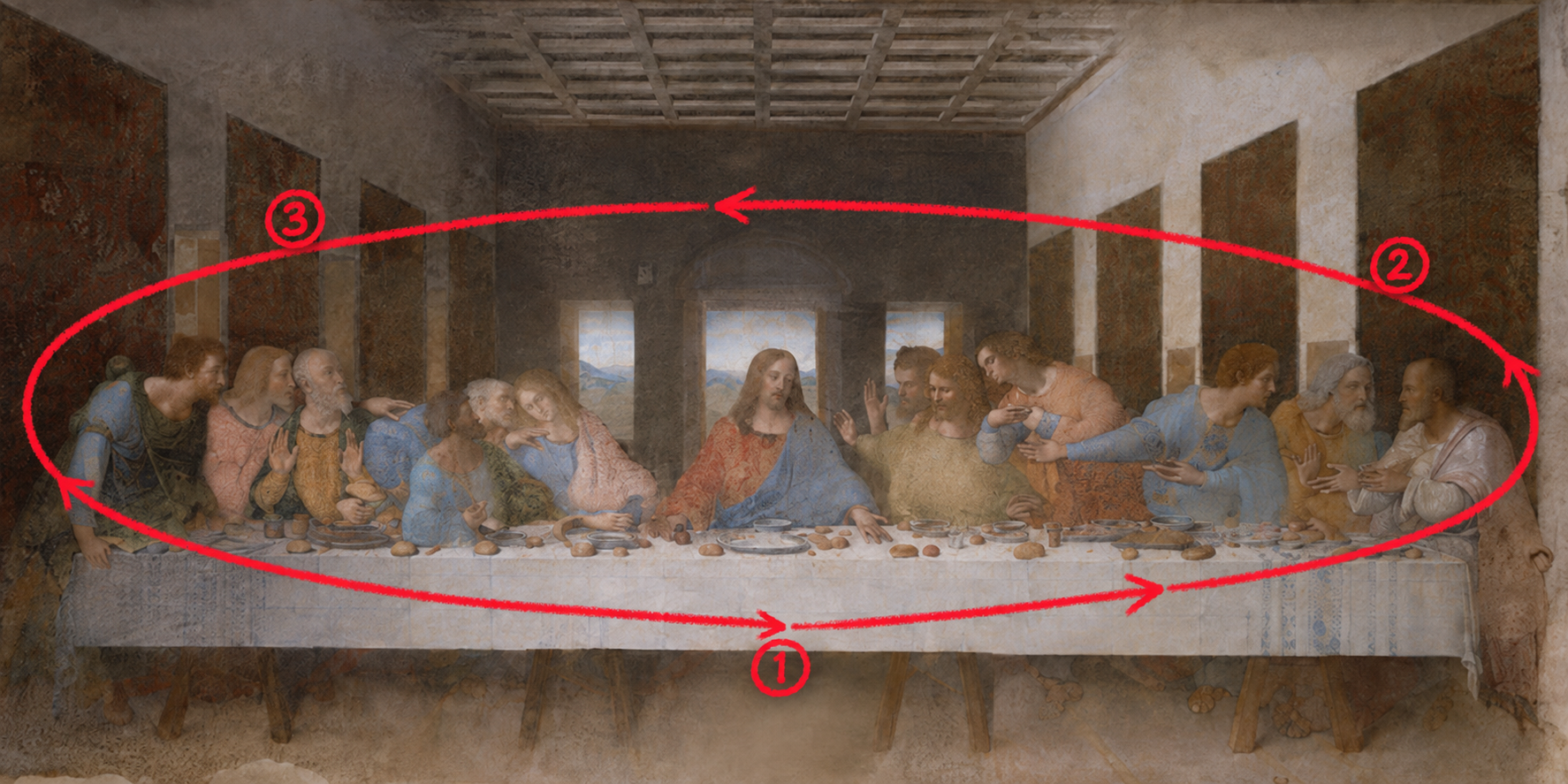
Le principe est de conserver La Cène immédiatement lisible tout en donnant l'impression que la caméra entre réellement dans le réfectoire. Le vol démarre face à la composition, se rapproche du Christ, contourne la table et les groupes d'apôtres, puis revient vers le centre.
L'objectif n'est pas d'animer fortement les personnages. Il est de créer de la profondeur grâce au mouvement de caméra, à la parallaxe et aux changements de perspective, tout en gardant la stabilité de la scène.
Le deuxième visuel montre le parcours du vol en rouge : il sert de repère simple pour comprendre la logique de circulation dans l'image avant de rédiger le prompt.
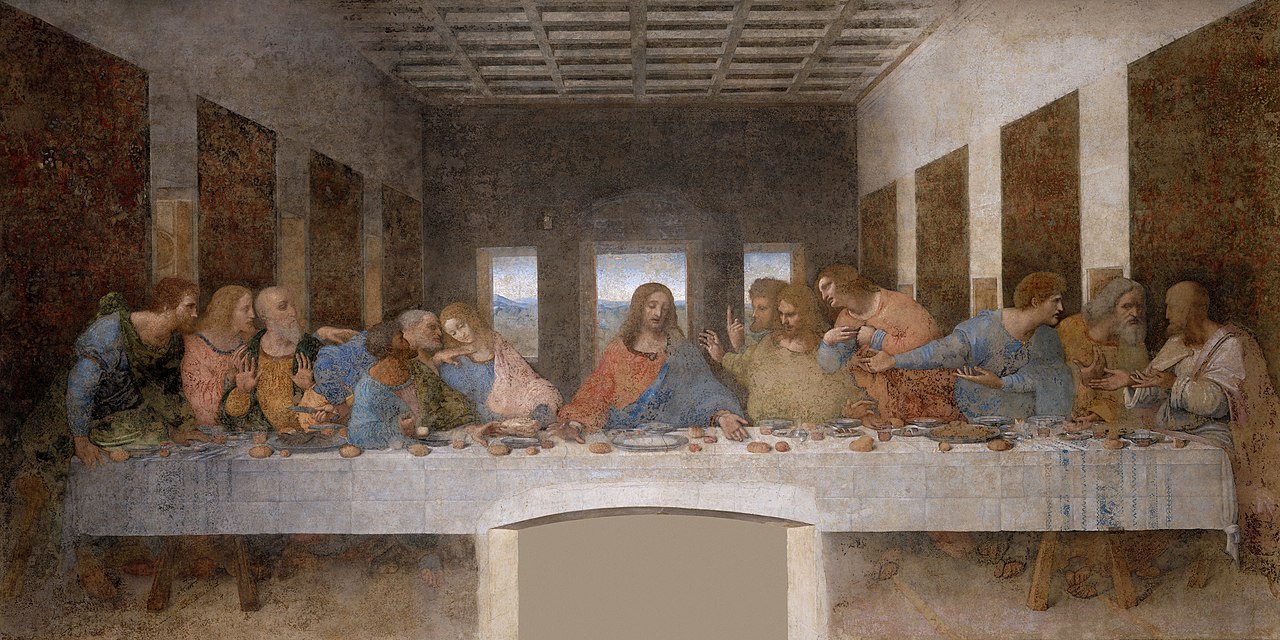
Use the horizontal reference image as the exact first frame. Preserve Leonardo da Vinci's original composition, character identities, poses, table, objects, architecture, color relationships and pictorial character. Do not redesign the scene, replace figures, add objects or modernize the painting.

Create one continuous 9-second immersive FPV-style camera flight with no cuts.

0.0–1.3 s: move forward from the original viewpoint, centered into the refectory, creating depth while keeping the full composition readable.

1.3–3.0 s: drift slightly left while pushing toward Christ, maintaining his identity and the surrounding apostles.

3.0–5.2 s: continue into a controlled clockwise arc around Christ, revealing spatial parallax without changing the arrangement of the figures.

5.2–6.8 s: fly low and close along the tabletop, passing the existing plates, bread, glasses and hands without inventing or duplicating objects.

6.8–8.0 s: continue behind the apostles on the right side, preserving faces, clothing, anatomy and their positions relative to the table.

8.0–9.0 s: make a final smooth arc from the far right back toward Christ, ending with him clearly readable as the visual anchor.

Keep human motion extremely restrained: subtle breathing, occasional natural blinking and minimal fabric response only. Allow a faint sense of dust in the air. Maintain continuous camera motion from the first frame. No frozen tableau, no morphing, no duplicate people, no new architecture, no text, no transition effect and no cut.
Œuvre : Léonard de Vinci, La Cène. Image de référence : Wikimedia Commons, « The Last Supper - Leonardo Da Vinci - High Resolution 32x16.jpg » — œuvre originale dans le domaine public ; reproduction numérique CC BY-SA 4.0. Parcours de caméra : Mycélium × Strativarius, créé pour cette fiche à partir du workflow documenté.